


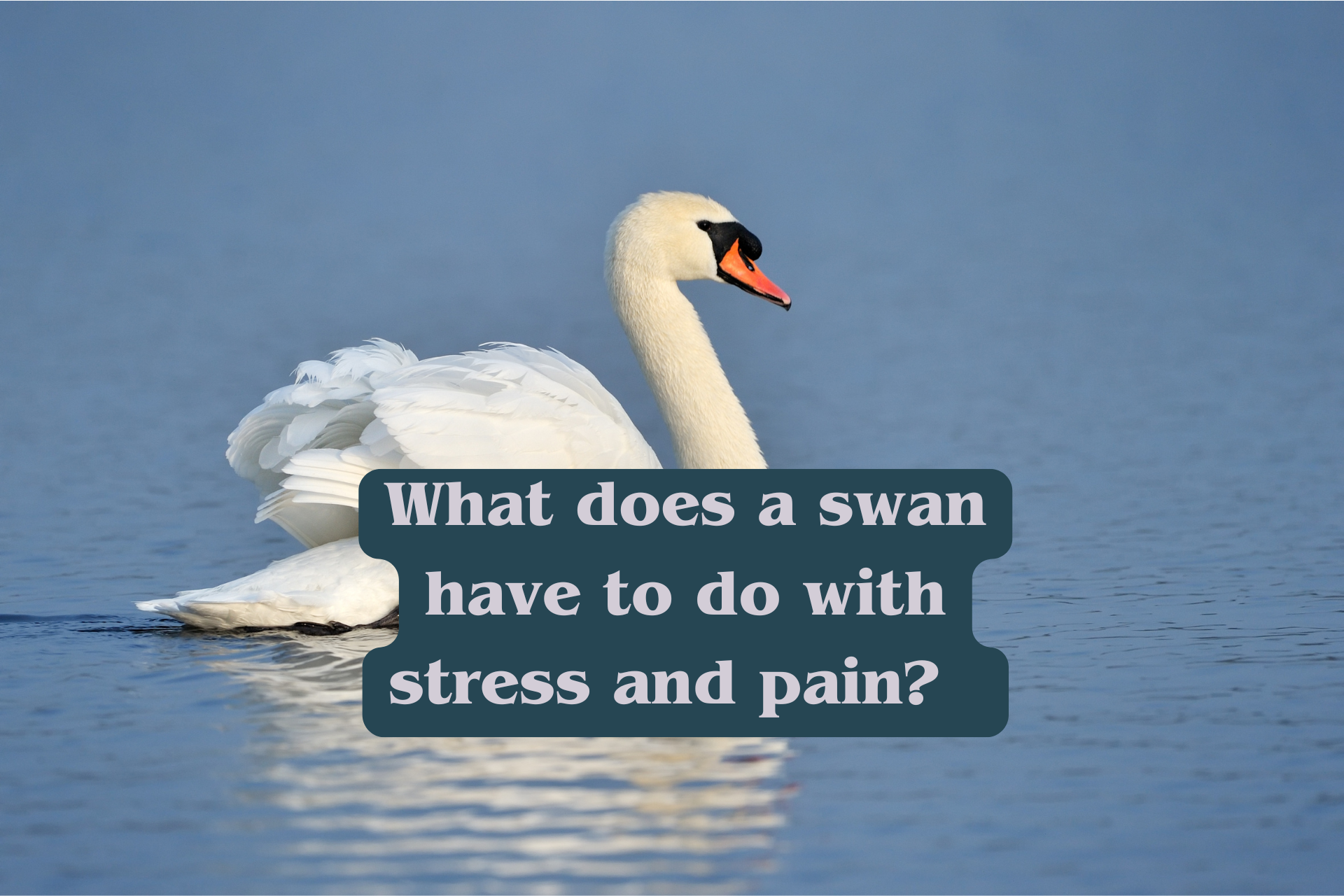
We often think of stress as something that lives in the mind – a busy week, a difficult conversation or a never ending to-do list. But stress doesn’t just stay in your thoughts – it lives within your body too. Over time, it can shape your health in ways many people don’t realise.
Stress is more than what is happening around you
When we talk about stress, we tend to focus on external pressures such as work, family and finances. But often the more powerful stress comes from within:
- The pressure to keep going
- The difficulty in saying no
- The need to be everything to everyone
- The voice that says “I should be coping better than this” or “I should be stronger than this”
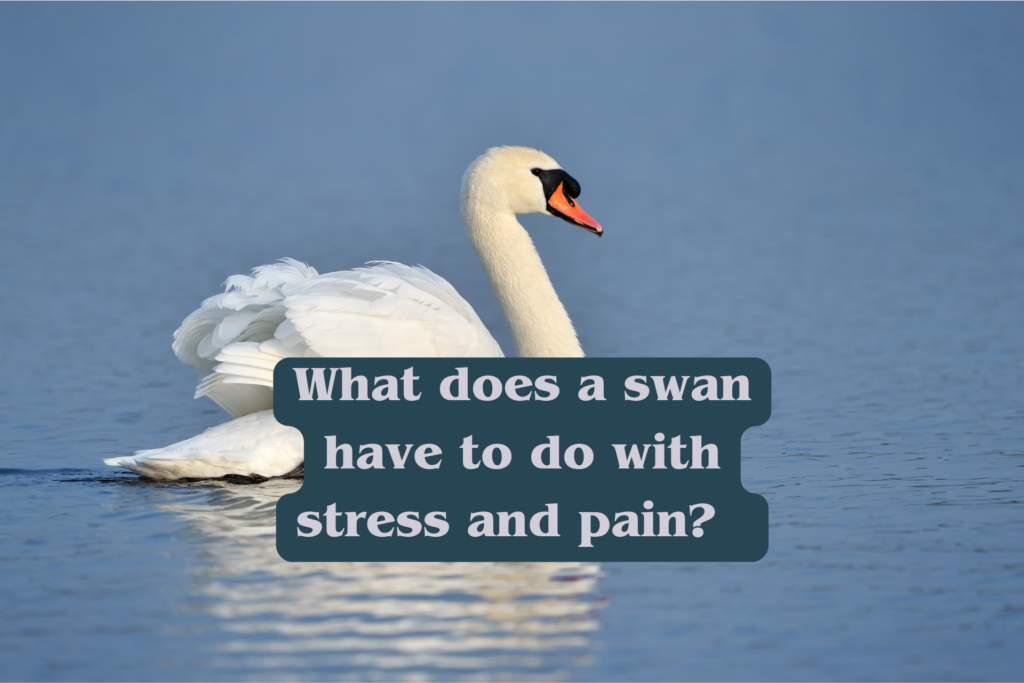
This internal pressure / the internal dialogue can keep your body in a constant state of threat/alert – even when life looks “fine” on the outside. This can make you feel like a swan – “I must look like I’m coping on the outside but below the surface of the water you are working overtime” – Have you ever felt like that?
Your nervous system is always listening
At the centre of all this, is your autonomic nervous system – the system that happens without conscious control and is responsible for keeping you alive and safe. It is responsible for breathing, heart rate, blood pressure, blood glucose levels, preparing muscles for fight/flight, digestion, immune function are just a few of the things it does.
It has 2 main branches:
- Sympathetic (fight or flight) – what I call Meerkat mode!
- Parasympathetic (rest, digest and repair) – what I call Hammock mode!
When your brain perceives a threat – whether that’s a looming deadline, financial bill, snotty email or emotional tension – your body responds as if you’re in danger. Your heart rate increases, blood pressure rises, muscles tense up, breathing becomes faster and shallower and stress hormones are released. This is a brilliant, protective system for running from a predator, but not so brilliant for modern day society where stresses are ongoing. We are not designed to be in this state for long periods of time.
When stress becomes stuck
If stress becomes constant, your body can get stuck in fight – flight mode (Meerkat on duty all the time). This is where ideas from the Polyvagal Theory can help us understand what is happening. Your nervous system isn’t just switching on and off – it is constantly scanning for safety or threat. The Meerkat on the lookout who hasn’t been able to swap with one of it’s pals!
If your system perceives ongoing stress, it can:
- Stay in a heightened state of alert
- Struggle to access deep rest and repair
- Begin to interpret more and more situations as unsafe.
It’s like the Ministry of Defence perceiving a constant threat and keeping all guards on the front gates on high alert and fully armed – being hypervigilent for a long period of time, makes them more susceptible to shooting at just the flap of a pigeon!
Pain and inflammation are part of our bodies protective mechanisms, so if the body senses constant threat it launches pain and inflammation to protect it.
The link between stress and illness
When your body is in survival mode, it prioritises immediate safety over long-term health. That means some systems get turned down such as digestion and immune system.
Chronic stress has been shown to:
- Suppress immune function
- Increase susceptibility to infections
- Contribute to inflammation
- Play a role in development and flaring of autoimmune conditions
- Cause digestive problems such as IBS, constipation, diarrhoea.
The body essentially says “Now is not the time to repair – we need to survive”. The problem is, for many people, that this emergency state never fully switches off.
A note on emotions – when we suppress or repress emotions, keep secrets, not talk about or express how we are truly feeling – this acts like stress on the body. Imagine trying to hold a beach ball under water – it requires a lot of energy doesn’t it. This constant use of energy is draining on the body and therefore stressful so can also cause pain, tension, illness and inflammation.
So YES, stress can cause you to be unwell physically.
Not because the body is weak but because it’s doing exactly what it was designed to do – protect you. It just can’t do it long term. The key is helping your body to recognise when it is safe enough to come out of survival mode. How can you do this?
The goal isn’t to eliminate stress as that is completely unrealistic. It is to help your nervous system become more flexible and therefore able to move out of meerkat mode and into hammock mode more easily.
Ways to manage stress and down-regulate nervous system
- Acknowledge your triggers. What is your nervous system reacting to? These are sometimes hard to identify as they can be lodged in your subconscious from past memories. They might even be your own personality traits such as perfectionism, high self critic, and being highly analytical. We work through this in 1-1 sessions.
- Learn to say no, without guilt as this is an emotion that drains energy. Boundaries are one of the most powerful ways to reduce pressure on the system.
- Use your body to calm your mind with gentle movement, walking in nature, pilates, yoga can all signal to the system cues of safety.
- Slow your breathing helps to activate the vagus nerve which is the main nerve for hammock mode (parasympathetic)
- Create moments of true rest and schedule it into the to-do list. Don’t put it at the bottom. This needs to be intentional pauses to allow the body to soften. Not phone scrolling but more mindfulness and meditation.
- Nourish yourself with regular meals, whole foods to stabilise blood sugar levels as elevated blood sugar levels are also a stress factor on the body as it’s another thing for it to regulate.
You don’t have to do this alone
Understanding stress is one thing but learning to shift it in the body is another. Inside my BEAT Pain Circle Membership, I guide you through simple, practical ways to regulate your nervous system and thus reduce pain and inflammation. I help bring your body back into a state of balance using movement, education, and mind-body tools that fit into already busy lives.
If you are ready to feel calmer, more in control and more at home in your body, you’d be very welcome to join us.
Join the BEAT Pain Circle Membership Here
Receive fresh wellness content straight to your inbox
Explore more
Related Wellness Resources




Help for your Chronic Pain
B.E.A.T Pain: Your Personalised Wellness Journey
Introducing the BEAT Pain approach, Katie’s strategy designed to empower your journey to lasting pain relief.

Brain
Uncover the role of the brain in your pain experience, gaining insights that empower your journey to lasting relief.
Energy
Elevate your healing potential by delving into the importance of good nutrition and sleep, unlocking vital sources of energy for your recovery.
Activity
Discover the transformative power of movement as we help you understand the pivotal role activity has on your path to recovery.
Therapy
Embark on a personalised healing journey with an array of therapeutic offerings, each designed to complement and support your unique chronic pain journey.
