



When we think about chronic pain we usually think about posture, injuries, discs or wear and tear but what are we missing when we don’t get better from treatments such as physiotherapy?
What if I told you that your personality might be a contributing factor to your chronic pain? What if the traits that have made you strong, capable and successful are also keeping your nervous system in threat mode and subsequently dialling up your pain? This is something we explored in depth inside the BEAT Pain Circle Membership group coaching this week.
How personality develops (and why it matters for pain)
Your personality is developed in childhood at the same time your nervous system was wiring itself to keep you safe. As children, we adapt to our environment in order to feel secure, loved and accepted.
- Some of us will have become:
- The responsible one
- The achiever
- The helper
- The peacemaker
- The indépendant one
- The strong one
These traits were intelligent adaptations as they helped us belong, helped us cope and helped us feel safe.
An example from my own childhood – I started boarding school at age 7 (which I enjoyed) but I remember being homesick on one occasion and matron telling me to be quite and go to sleep. I therefore learned not to cry, not to show emotion as this was considered weak and needy! I learned to be the strong responsible one early on.
Also during childhood our nervous systems are learning: what feels threatening, what feels safe, what earns approval, what causes rejection. Your personality and nervous system developed alongside each other.
When Strength Becomes Internal Pressure
Many people with persistent pain share similar traits:
- Conscientious
- Reliable
- Perfectionism
- People pleasing
- High-achieving
- Sensitive to others’ needs
- Self-critical
- Prone to suppressing anger or sadness
- Reluctant to ask for help
These are all wonderful traits. They build careers, families, communities. But they can also create chronic internal pressure. When you constantly:
- Push yourself
- Avoid disappointing others
- Suppress frustration
- Say “I’m fine” when you’re not
- Hold everything together
Your nervous system stays slightly on edge. And a nervous system that feels under threat — even emotional threat — increases protective output. One of those outputs is pain. This doesn’t mean pain is “all in your head.” It means pain is a protective response. And protection increases when the system feels overloaded.
Identity and Chronic Pain
Personality traits form the foundation of our identity. Identity is the story we tell ourselves about who we are.
For years, my identity was:
Strong.
Fit.
Military.
Resilient.
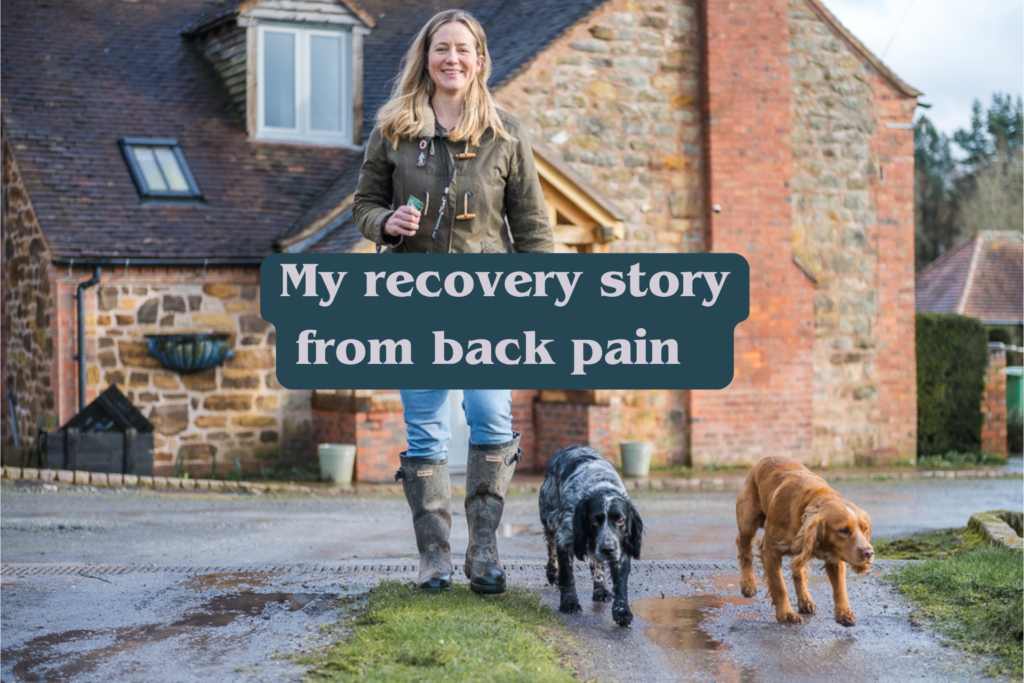
When I developed chronic back pain, that identity shattered. I was no longer the “strong, capable one” in the way I had always been. I wasn’t coping but I didn’t want to admit it. I remember my husband saying “Come on, you’re a Flight Lieutenant in the RAF – you can cope with this (Solo parenting with him serving abroad). I so wanted to cope”
Pain forced an identity shift. And identity shifts are deeply uncomfortable. But here’s the paradox:
Sometimes pain is not just something to eliminate — it’s something that invites evolution/change. Many people who have recovered from Chronic Pain actually say they are grateful for it, for this reason. It allowed them to live a life more authentic to their true selves.
How Do You Change Identity Without Losing Yourself?
If my identity as “the strong one” contributed to internal pressure… do I have to stop being strong?
No.
Instead of:
“I am the one who copes alone.” Shift toward: “I am capable — and I allow support.”
Instead of:
“I must always achieve.” Shift toward: “I value achievement and I value rest.”
Instead of:
“I’m fine.” Shift toward: “I can be honest about how I feel.”
Identity change doesn’t require dramatic life upheaval. It requires micro shifts.
Here are a few examples:
1. Add 5% More Honesty
Notice when you automatically say “I’m fine.”
Experiment with being 5% more truthful.
2. Reduce Self-Criticism
When you notice internal pressure, soften the language you use with yourself. Be kind to yourself. Talk to yourself like you would someone else.
3. Allow Imperfection
Deliberately leave something unfinished or “good enough.” Done is better than perfect.
4. Ask for Help Once This Week
Even if it feels uncomfortable. These are not personality changes. They are nervous system recalibrations.
If you live with chronic pain, your personality is not the problem. Your nervous system is not faulty. You adapted brilliantly. But sometimes adaptations that once kept us safe begin to create internal strain. And strain keeps the system in protection. When we gently reduce internal pressure, pain often reduces too.
⸻
We Explored This Deeply in the Membership This Week
Inside our group coaching session this week, we explored:
- The personality traits commonly linked with persistent pain
- How childhood adaptations shape adult nervous systems
- Identity shifts after pain
- Practical exercises to identify certain personality traits – understand where they came from and work out ways to allow these traits to serve us rather than burden us. It was a great conversation.
If this resonates with you, and you’re ready to understand your pain at a deeper level — I would love you to join us.
Healing isn’t about becoming someone else. It’s about becoming more fully yourself — without the internal pressure.
Receive fresh wellness content straight to your inbox
Explore more
Related Wellness Resources





Help for your Chronic Pain
B.E.A.T Pain: Your Personalised Wellness Journey
Introducing the BEAT Pain approach, Katie’s strategy designed to empower your journey to lasting pain relief.

Brain
Uncover the role of the brain in your pain experience, gaining insights that empower your journey to lasting relief.
Energy
Elevate your healing potential by delving into the importance of good nutrition and sleep, unlocking vital sources of energy for your recovery.
Activity
Discover the transformative power of movement as we help you understand the pivotal role activity has on your path to recovery.
Therapy
Embark on a personalised healing journey with an array of therapeutic offerings, each designed to complement and support your unique chronic pain journey.
