

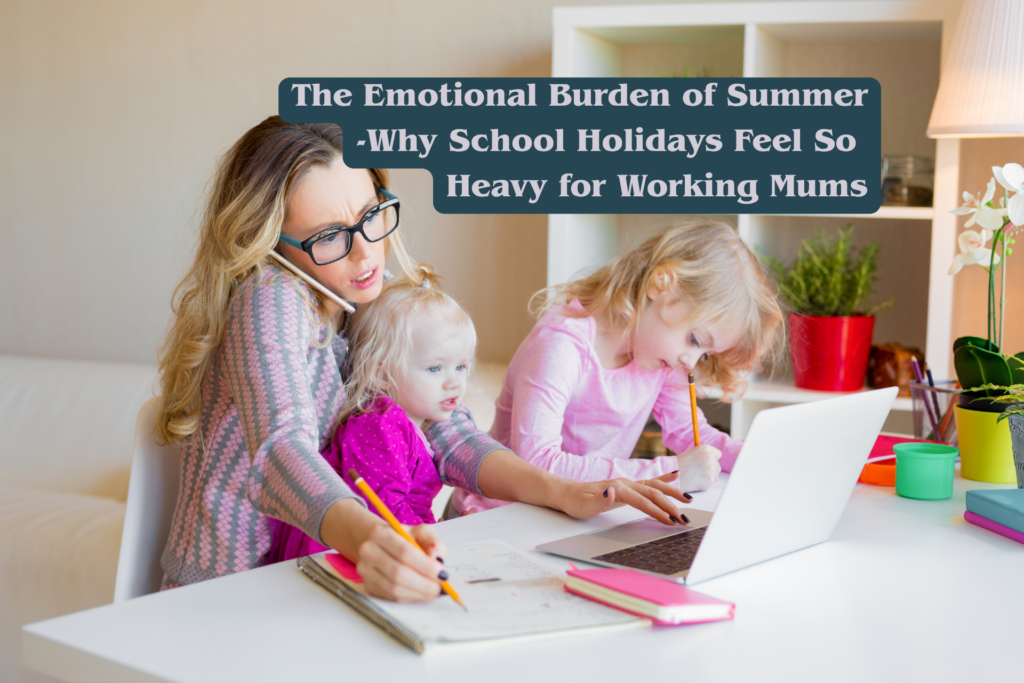
For many working Mums, especially those dealing with chronic symptoms such as pain, fatigue, headaches, and IBS; summer holidays can feel like a juggling act which can make these worse. Here’s why.
For many families, the start of the summer holidays is something to celebrate, but if you are juggling career and symptoms it can leaving you feeling daunted about how you are going to get through it and do everything required of you without dropping any balls!
Behind the smiling family photos and the family days out, lies an invisible mental load. Six weeks of childcare to organise. Work deadlines that haven’t disappeared. Keeping children entertained. Remembering swimming kits, packed lunches and play dates. All whilst also trying to create magical memories and somehow keeping your career on track.
If you live with persistent pain, fatigue, migraines, IBS, fibromyalgia or another chronic condition, there’s an additional layer that often goes unnoticed.
The pressure to do it all, and do it all to a high standard.
Many of the women I work with aren’t lazy. They’re the complete opposite.
They’re:
- Conscientious.
- Reliable.
- Perfectionists.
- People Pleasers.
- Compassionate.
- High achievers.
They’re the ones who want to do a good job at work, be emotionally available for their children, keep the house running, support everyone else and somehow still look after themselves.
When summer arrives, those demands collide like waves crashing together.
One minute you’re answering work emails / seeing clients, the next you’re making lunch, then driving to a holiday club before rushing home to finish a report. At the end of the day, instead of resting, you’re catching up on jobs not done and wondering whether you’ve done enough in either role.
The internal dialogue that sounds so familiar to so many women goes something like this:
- “I’m letting my boss down.” “I’m letting my clients down”
- “I’m not giving my children the summer they deserve.”
- “I should be coping better than this.”
It’s not the school holidays that flare symptoms. It’s not the lack of routine that flares symptoms. It’s what’s happening inside our minds that matters most whether that is consciously or unconsciously.
- The constant pressure.
- The guilt.
- The resentment that we don’t feel allowed to admit.
- The fear of getting it wrong.
- The belief that everyone else seems to be managing.
These emotions keep the nervous system on high alert. When my back pain started, I didn’t realise it at the time, but I was shutting down resentment without even knowing it. Little did I know at the time that these sorts of emotions and feelings can lead to physical tension in the body.
When the brain perceives ongoing stress and threat, it prioritises protection over recovery. For someone with an already sensitised nervous system, that can mean pain increases, fatigue deepens, headaches become more frequent, digestion becomes unsettled or sleep deteriorates.
It’s not because your body is broken. It’s because your body is responding exactly as it was designed to.
We don’t talk enough about resentment.
This is often the emotion women whisper to me once they know they won’t be judged.
“I love my children… but I feel resentful.”
Not resentful of their children, but resentful that the responsibility falls so heavily on them. Resentful that they’re trying to hold everything together while everyone else seems to carry on as normal. Then comes the guilt for feeling resentful in the first place. The emotional tug of war is exhausting.
The pressure to be perfect is making us ill. Many women living with chronic symptoms have spent years putting everyone else first. They’ve become experts at ignoring their own needs. The irony is that the more we push through, the more our nervous system loses opportunities to recover.
Recovery doesn’t happen because we work harder. Recovery happens when we create the conditions that allow our body to feel safe enough to heal. This is what the BEAT pain approach does. It teaches you how to create those conditions.
This summer, try lowering the bar, not because you’ve failed, but because you’re human.
Ask yourself:
- Does every day have to be magical?
- Could “good enough” actually be enough?
- Could your children benefit from seeing a parent who rests instead of one who constantly pushes through?
- Could you ask for more help?
- Could you let go of one expectation you’ve placed on yourself?
Sometimes the most powerful thing we can do is stop trying to earn our worth through doing.
A message to every working mum
If your symptoms flare this summer, don’t immediately assume you’ve done something wrong or that you are more physically damaged. Pause!!!
- Ask yourself what emotional load you’re carrying.
- Notice the expectations you’ve placed on yourself.
- Your body isn’t trying to punish you.
It may simply be asking for something you’ve become very good at denying yourself: compassion, rest and permission to be enough.
This summer, your children don’t need a perfect mum.
They need you.
And you deserve to enjoy some of the summer too.
If you would like to understand more about the BEAT pain approach and how it can help you create those conditions for recovery from persistent symptoms such as pain, fatigue, headaches, and IBS then please watch the 15 minute video below.
Receive fresh wellness content straight to your inbox
Explore more
Related Wellness Resources




Help for your Chronic Pain
B.E.A.T Pain: Your Personalised Wellness Journey
Introducing the BEAT Pain approach, Katie’s strategy designed to empower your journey to lasting pain relief.

Brain
Uncover the role of the brain in your pain experience, gaining insights that empower your journey to lasting relief.
Energy
Elevate your healing potential by delving into the importance of good nutrition and sleep, unlocking vital sources of energy for your recovery.
Activity
Discover the transformative power of movement as we help you understand the pivotal role activity has on your path to recovery.
Therapy
Embark on a personalised healing journey with an array of therapeutic offerings, each designed to complement and support your unique chronic pain journey.
